A few weeks ago, my mom showed me a video on her phone. Her friend’s teenage daughter had just won a dance championship. The recording was simple — a stage, music, applause at the end. My mom was genuinely happy, and their group chat was full of congratulations. Proud parents. Positive emojis. A small, warm collective celebration.
I watched the performance carefully. What stayed with me wasn’t the choreography itself, but the weight of the word championship. See, I knew how these titles are constructed — how fragmented the systems behind them are, and how easily meaning can be inflated by context. And suddenly I found myself holding two truths at once. One filled with genuine pride and meaning, and the other with structural knowledge that made that meaning feel fragile.
That moment stayed with me. Not because the child didn’t deserve celebration — but because I couldn’t stop thinking about what exactly was being celebrated, and where it was supposed to lead.
That discomfort didn’t come from theory. It came from proximity. Some time earlier, I had returned to dance myself — not as a child chasing medals, but as an adult renting studios for my own practice. Quiet hours. Empty rooms. No audience. No titles. Just movement and repetition. Enough time inside these spaces to see how they actually function.
At first, I didn’t judge it. There was something honest about it. Almost touching. But the more studios I visited, the more a familiar feeling crept in — not disappointment, but a quiet fatigue. The kind that doesn’t come from physical effort, but from recognizing something you’ve seen before.
There’s a particular kind of tiredness that comes from recognizing the same pattern dressed in different costumes. You meet it in art scenes, “creative communities,” wellness culture, online entrepreneurship — and now, unexpectedly, in dance studios. The props change. The mechanism stays.
And the mechanism is simple: when a field can’t offer a real path, it offers a story instead. When it can’t offer a career, it offers a badge. When it can’t offer stable economics, it offers ceremonies — titles, rankings, “championships,” symbolic currencies that look like progress from a distance.
For a while it works, because human beings don’t live on reality alone. We also live on meaning. The trouble begins when the symbolic world becomes a substitute for the real one — and children are brought into the deal before they can see the difference.
I’m sensitive to this — maybe painfully so. Not because of dance, and not because of ignorance or naivety, but because I’ve seen what happens when access to reality is delayed. When people are given a coherent story instead of accurate information — a map that works well enough, until it suddenly doesn’t. When reality arrives late like that, the damage isn’t emotional. It’s structural: the loss of preparation, and with it, the loss of agency.
What follows is disorientation. A slow questioning of the past, the future, and eventually one’s own sense of agency — not because of personal failure, but because preparation was never possible. The data wasn’t available. The story was complete enough to live inside. That’s why the dance scene didn’t just feel underfunded to me. It felt familiar.
See, what I found wasn’t an industry. It was an ecosystem of survival. Passion keeping the lights on — people trying to hold a craft together in a culture that doesn’t really know what to do with it.
The spaces themselves told the story. Broken mirrors. Worn-out floors. Makeshift sound systems. Not exploitation, not villainy — just thin margins and constant improvisation. There is no stable structure here. No reliable demand that rewards excellence in a way that allows adults to live like adults.
And where there’s no structure, something else tends to appear. Performance. Not performance as art — performance as compensation.
In the adult layer of the dance world, everything is fragile. Instructors don’t earn “a little.” They earn wages that, in most cases, cannot sustain an adult life on their own. Not without parental support. Not without a partner who carries the financial weight. Not without stacking multiple jobs and accepting permanent instability. Even choreographers end up playing a different game — not one of economic structure, but of how significant they appear.
But then you look at the children’s side of it, and the atmosphere shifts.
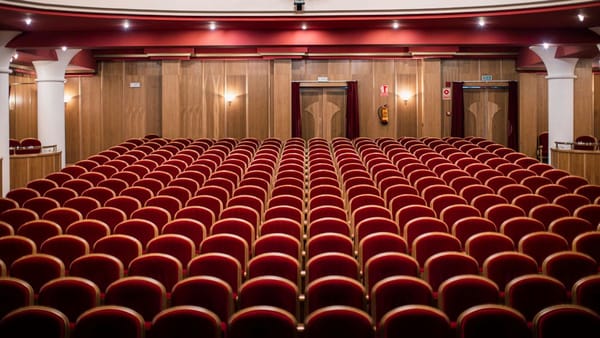
Suddenly, there is abundance — not abundance of money, but abundance of ceremonies. Competitions. Tournaments. Championships. Endless federations with impressive names. Endless “world titles.” Shelves full of trophies arranged like sacred objects — standing in empty studios with broken floors and a cheap portable speaker in the corner.
And this isn’t just small-scale niche activity. Globally, the dance competition market itself is already valued in the billions of dollars, with robust growth projected through the next decade — even though most of that value is driven by participation, fees, and events, rather than major sponsorships or professional career infrastructure.
It feels like entering a small temple dedicated to victory — except the temple is strangely empty most of the week. Many studios run at partial capacity. Some disappear after months. Some survive on a few crowded classes and a lot of silence. And yet the trophies multiply, as if plastic and metal could compensate for the absence of a real market.
Children are crowned “champions” in systems so fragmented that the word itself loses meaning. Parents are asked to fund travel, costumes, entry fees, training camps, workshops, and extra coaching — all in the name of development, opportunity, and achievement. And eventually, the quiet question appears: development toward what?
Because if there is no real career path here — if the adult reality is mostly underpaid instruction, inconsistent gigs, and the unspoken truth that visibility matters more than medals — then what exactly are we selling to parents? What kind of world are we introducing into a child’s nervous system?
There is a particular cruelty in giving a child a ladder that leans against no building. I don’t think most dance instructors wake up thinking, "Let’s scam parents." Life is rarely that cartoonish. What I see instead is something quieter and more tragic: an ecosystem that can’t survive on truth, so it survives on ritual.
Adults who once believed in the ladder. Who invested years into it. Who eventually hit the wall of adulthood and discovered that nobody outside the bubble cares. Now they keep the ladder alive — because it’s the only thing they have to offer, and sometimes the only thing they can bear to believe.
So the ceremony continues.
And once you notice it here, you start noticing it elsewhere. Dance happens to be a place where the pattern is unusually visible — where symbols, effort, hope, and delayed reality collide in plain sight. But the pattern itself isn’t confined to it.
The greater danger isn’t that symbols exist. Symbols can be playful. A trophy can be a souvenir. Competition can be a game. The danger begins when symbols are mistaken for reality — when medals stand in for worth, when trophies quietly promise a future, while the world remains under no obligation to honor either.
So if there’s an ethical line here, it isn’t “children should never compete,” and it isn’t “everyone involved is acting in bad faith.” The line is simpler, and harder: are we giving young people an honest map?
Are we teaching them that effort, mastery, and joy can be meaningful even without a guaranteed outcome attached to them? Are we allowing discipline to stand on its own — without quietly selling destiny through symbols? Are we protecting their agency by telling the truth early, gently, consistently — while the ground is still soft?
Because hardship isn’t the real danger. Reality can be hard and still survivable. The real danger is delayed reality. The cliff edge disguised as a smooth road. The moment when the story ends and a young person realizes the world doesn’t care about the symbols they were taught to worship.
Maybe the task isn’t to destroy ceremonies or shame the people inside them. Shame only makes illusions harder to let go of. Maybe the task is quieter: to refuse to sell ladders that lean on nothing. To treat symbols as what they are — games, souvenirs, gestures — without turning them into prophecy.
Because yes, illusions can be warm. They can feel like care. They can feel like protection. But when the lights go out, only reality remains. And the kindest thing we can do for a young person is to hand them a map that matches the world — while there is still time to choose their path with open eyes.
Thanks for reading. If you enjoy my work and want more like this, consider supporting it. This space exists thanks to readers — essays and research take time. You can subscribe, contribute, or explore reading lists I curate. Every bit of support helps.