Lately, against the backdrop of mounting global tensions and the visible breakdown of the world order that, especially in the West, had long been extraordinarily favorable, I keep seeing a massive festival of denial. When instructions begin to fail and masks start slipping, the people who seem to suffer most are those who never understood that the whole thing was, in large part, a performance — a system of norms, permissions, and narratives designed to uphold a particular theory of reality.
A theory that was never true in its essence, only stabilized by power. We are seeing that more clearly now, as the empire starts showing its teeth more openly, reminding everyone what always sat underneath the language of legitimacy, order, and rules. This is the real face of power. This is the hidden foundation of the so-called rules-based order that so many people mistook for reality itself.
I wrote some time ago that truth without preparation is a form of violence, and often a brutal one. People will go very far to protect their illusions, especially when those illusions once worked in their favor. That applies most obviously to Boomers, and perhaps to the oldest layers of Millennials too. They were shaped inside a system that gave them enough coherence, enough upward motion, enough symbolic reward to make belief feel natural.
But from my perspective — as a younger Millennial — the more fascinating group is not them. It is the people around my age, or close to it, who were never really served by this order in any meaningful way, and yet still defend it almost instinctively, repeating its slogans as if they were inherited truths. You hear it in lines like, “The more you know, the worse you sleep,” as if chronic anxiety were a sign of depth, as if insomnia proved awareness, as if depression, nervous exhaustion, and the constant squeeze so many people now live under were somehow the natural side effects of intelligence.
I find that deeply fascinating. And unfortunately, deeply stupid.
Because somewhere along the line, people began mistaking dysregulation for depth and treating internal collapse as a mark of seriousness. But real awareness should not look like total internal defeat. If every insight leaves your nervous system more fragmented, more panicked, more sleepless, and more depleted, then what you have may not be clarity at all. It may be overload. It may be identification with a dying atmosphere. It may simply be that you have mistaken psychic colonization for consciousness.
A lot of younger people inherited the language of seriousness from generations that at least got something in return. A house. A stronger currency. A more coherent future. The feeling that effort still led to a real outcome. But many people in their late twenties or thirties inherited something else: precarity, inflated costs, housing absurdity, low trust, ambient crisis, endless pressure, and a permanent demand to optimize themselves inside a structure that no longer even pretends to love them. And still, many of them continue defending the emotional legitimacy of that same structure. They inherit not the rewards, but the explanations. Not the stability, but the morality used to justify instability. Not the future, but the demand to continue respecting the game.
That is why so much of the current discourse feels surreal to me.
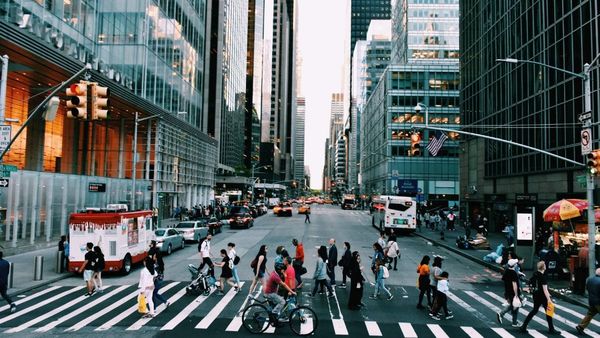
There is all this feverish geopolitical obsession, all this compulsive consumption of decline, all these endless strategic dramas narrated by exhausted old men and repeated by younger men who think proximity to imperial vocabulary makes them serious. Maps, sanctions, escalation, regime language, security frames, the latest symbolic victory, the latest necessary elimination, the latest performance of gravity. Meanwhile, large parts of my generation are standing in a grocery store trying to decide which eggs they can afford without feeling vaguely insulted by the entire economy.
That contrast is impossible for me to ignore. Because from where I stand, a great many of us do not have much to defend in the old order. We do not own the stage. We do not own the institutions. We do not own the narrative. Many do not own homes. Many barely own psychological margin. So the demand that we emotionally invest ourselves in the final convulsions of a system that never truly admitted us into stability feels, at times, grotesque.
I do not mean that as a call to ignorance, and certainly not as some romantic celebration of political illiteracy. I mean something simpler, and harder: that one can understand the structure without surrendering one’s life to it. One can know perfectly well what kind of world one lives in and still refuse to give that world unlimited rights over one’s nervous system. One can see the shadows clearly without turning them into a home.
That distinction matters to me because many people now confuse immersion with seriousness. They think adulthood means remaining permanently saturated with the atmosphere of crisis. They consume decline until it becomes their inner weather, and then call that realism. But constant exposure to ugliness does not automatically produce depth. Very often it simply produces fatigue, cynicism, and a low-grade spiritual deformation that starts to feel normal only because it has become common.
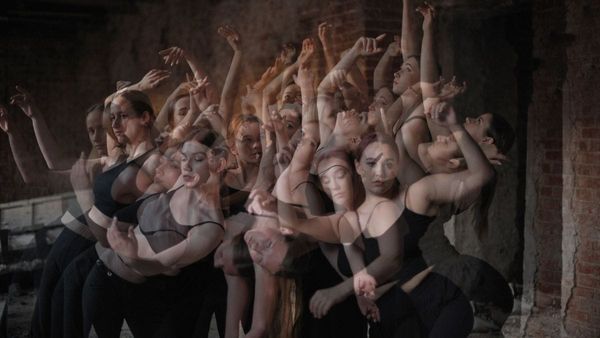
This is why acts that seem almost childish from the outside begin to look, to me, increasingly intelligent. Going to a dance studio on a Monday afternoon while the timeline screams about geopolitical escalation may look trivial only to someone already possessed by dead language. Writing an essay instead of refreshing the latest war analysis may seem unserious only to a consciousness that has forgotten what seriousness is for. Yet in a decaying atmosphere, the decision to keep moving, creating, and protecting one’s inner life begins to look less like innocence and more like sanity.
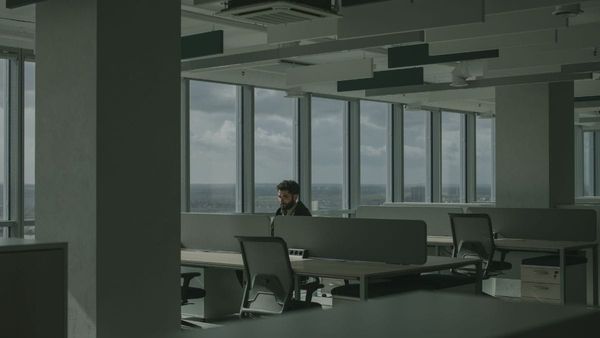
Because the question is no longer whether the world is ugly. It is. The question is not whether power is real, whether empire lies, whether media feeds on panic, whether violence sits underneath institutional language. Of course it does. The real question is how to remain alive without becoming psychologically inhabited by death. How to understand the world without allowing it to dictate the climate of your interior life. How to stay lucid without becoming one more drained organism in a chair, spiritually flattened by the endless consumption of fear.
To me, this is no longer a side question. It may be the question.
And the answer cannot be optimism. It cannot be denial, positivity, or spiritual cosmetics. The world is what it is, whether we like it or not. But neither can the answer be total immersion, because total immersion now often means allowing a diseased atmosphere to set the terms of your being. At some point, the line between awareness and possession becomes very thin.
So the task, at least as I see it, is something more disciplined. To know what kind of world you live in, to understand its structure, to recognize its games, and still refuse to become inwardly organized around them. To build some form of protected interior and exterior space in which life can still take shape on human terms. A blog can be that. A creative practice can be that. Dance can be that. A quieter rhythm of living can be that. A filtered relation to information can be that. Even something as unglamorous as lowering the cost of one’s life and refusing certain status rituals can become part of that architecture.
I think this matters because creation itself begins to change when the fantasy falls away. It stops being a performance of relevance and becomes something older, smaller, and more necessary. Not a strategy for visibility, but a way of staying awake. Not a brand, but a thread tying one back to life. Not a bid for scale, but a refusal of full capture.
That may be why I no longer see movement, beauty, writing, and private forms of meaning as luxuries reserved for stable times. If anything, they become more essential as the surrounding atmosphere grows more grotesque. In a world increasingly organized around fear, exhaustion, abstraction, and the endless management of decline, choosing to remain creative, embodied, affectionate, and inwardly alive begins to feel less decorative and more defiant. Not because it changes the geopolitical board, and not because it earns moral prestige, but because it refuses to hand over the whole field of human experience to ugliness.
None of this will be rewarded by the system. Why would it be? A system organized around extraction does not reward what cannot be easily drained. But that changes nothing. If there is still any dignity left in this phase, it may lie precisely here: not in denying the darkness, and not in worshipping it either, but in refusing to let it dictate the terms of one’s inner world.
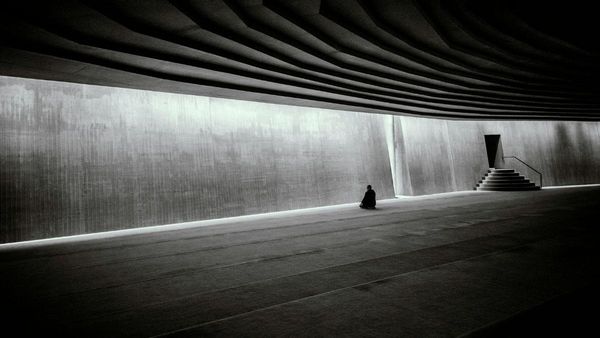
The people most possessed by the shadows often mistake their possession for realism. They sit inside the cave discussing the movement of shadows with tremendous seriousness, as though this were the highest form of consciousness available. Perhaps that is why choosing life now feels almost offensive. To dance, to make something beautiful, to preserve one’s energy, to build meaning on a human scale, to care more about the texture of actual life than the abstract rituals of exhausted empires — all of this seems naive only from inside the cave.
I do not believe it is naive.
I think one of the most radical acts available now is to see the world clearly and still refuse to become its echo. To understand the ugliness without building an identity out of it. To remain informed without becoming consumed. To keep creating, moving, loving, and shaping a life, even in fragments, even without guarantees, even while history offers no permission slip.
Because in the end, the measure of a life is not how convincingly it mirrored the dominant fear of its era. It is whether it managed to remain alive inside it.
Thanks for reading. If you enjoy my work and want more like this, consider supporting it. This space exists thanks to readers — essays and research take time. You can subscribe, contribute, or explore reading lists I curate. Every bit of support helps.