
Despite trying to maintain some basic form of digital hygiene, I still occasionally fall into a session of doomscrolling, moving through Reels, Shorts, or whatever stream of content happens to be available with very little conscious engagement. This is common enough and not particularly interesting on its own.
What interested me was what happened after one of those sessions.
After perhaps ten or fifteen minutes and several dozen Instagram Reels, I closed the app and realized that I could not remember a single creator I had just watched. Not one name. Not one username. Not even a profile picture.
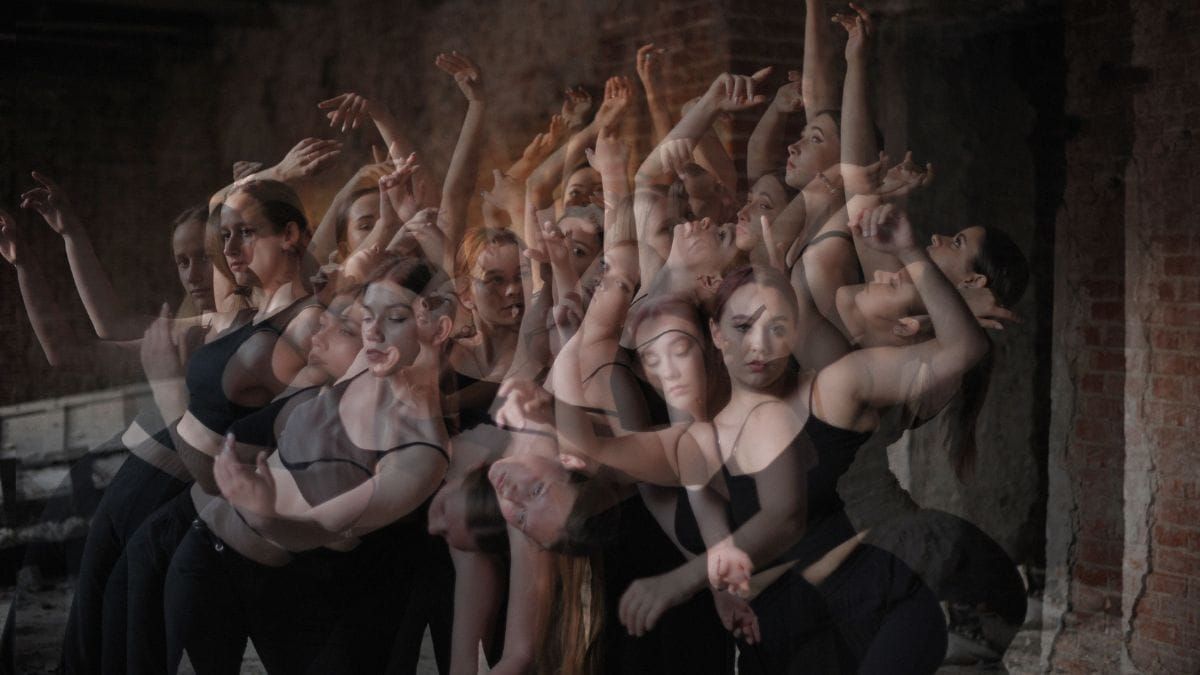
There had been faces, voices, jokes, staged situations, fragments of lifestyles, reactions, conflicts, and performances of personality. But I could not connect any of them to an actual person. They had passed through the screen as content and disappeared after serving their function.
This probably should not have surprised me. I have already written about the attention economy and the decline of its promise to ordinary people — the idea that anyone could become visible, build an audience, and turn that visibility into a better life. But this experience showed me something slightly different.
It was not simply that there was too much content, or that too many creators were competing for limited attention.
The creator had become irrelevant to the experience.
Once I noticed this, I began seeing it more clearly. I realized that in most cases I could consume fragments of all these lives without becoming interested in a single life behind them. And this changed the way I thought about the growing panic around generative AI.
Because in this specific context, I realized that I did not particularly care whether the scenes had been performed by real people or generated by a machine. And yes, of course, there is a difference between a living person and a generated character. Truth, authorship, experience, and intention still matter.
But they did not matter to the function the feed was performing at that moment.
From the perspective of an overloaded person looking for a brief cognitive escape after work, the material was not being consumed as testimony, art, or a form of contact with another human being.
It was being consumed as stimulation. A face, a conflict, a rhythm, a surprise, and then the next object. The origin of the stimulus became secondary because the person producing it had already been removed from the experience. And this happened long before generative AI became a mass cultural concern.
The feed separated content from the creator before generative AI made it possible to separate content from the human.
Doomscrolling already existed. Algorithmic feeds already existed. TikTok had already reached its cultural peak during the pandemic, when millions of people repeated the same dances, sounds, jokes, reactions, and dramatic formats while the recommendation system organized their variations into a continuous stream.
We called these people creators, but very often they functioned as mere participants in a larger trend.
The trend was the real cultural object.
The person was one of its temporary executions.
A successful pattern appeared. Thousands of people copied it, introduced a small variation, and waited to see whether the algorithm would preserve their version.
In essence, humans began behaving like generators before generators learned to behave like humans.
A social media trend is a mechanism for reproducing behavior with mutations. A person observes a pattern selected by the system, recreates it, changes a few variables, and submits the result to the same system for further selection.
They become simultaneously a human being, a carrier of the pattern, and the operator of their own image.
This is why generative AI entered unusually hospitable territory.
It did not arrive in an environment organized around singular authors, long memory, and sustained relationships between creators and audiences.
It entered a system that had already made its dominant content short, modular, repetitive, measurable, and largely detached from meaning outside the immediate reaction it produced.
The machine did not need to learn how to create culture in the fullest sense of the word. It only needed to learn how to produce objects compatible with the feed. A hook. A reaction. A conflict. A performance of spontaneity.
Humans had already spent years learning the same discipline.
The algorithm did not reward people for becoming more fully themselves. It rewarded them for becoming legible to a system of measurement. Their personalities had to be compressed into recognizable formats. Their lives had to become scenes. Even authenticity developed its own templates: the casual confession, the accidental-looking camera angle, the supposedly spontaneous reaction arriving with subtitles and a perfectly timed cut.
This does not mean that every emotion was false.
People adapt to environments. They observe what circulates, internalize its grammar, and begin expressing themselves through the forms that remain visible. But over time, the distinction between expression and optimization becomes harder to locate. A person may still be sincere, but sincerity itself has to become compatible with retention.
Once human behavior has been reorganized around repeatable formats, generative AI no longer looks like a complete rupture.
A model does not need a life to reproduce the surface structure of a lifestyle video. It does not need surprise to generate a reaction or a relationship to produce a short conflict about relationships. It only needs enough examples of how these things are represented inside the feed. This is why the distinction between “real human content” and “AI slop” can feel incomplete.
There is obviously a difference in origin.
But from the perspective of the feed, both can perform the same function.
Both can interrupt thought, create a brief emotional signal, and hold the eye long enough for the system to deliver the next object.
For a tired viewer who is not looking for a particular author, community, or piece of knowledge, that functional similarity may matter more than the difference in origin. Not because people have stopped caring about humanity in some grand philosophical sense. But because this specific form of consumption does not require much humanity from the material.
The creator may spend hours producing a video, building an identity, studying the algorithm, editing the footage, and watching the analytics afterward.
On the other side, the result may exist for less than thirty seconds in the awareness of someone who will never remember their name.
For the creator, the content may be work, ambition, identity, and the possibility of a different life. But for the viewer, it may be one disposable unit in a stream used to survive the space between work and sleep.
Generative AI does not create that asymmetry.
It makes its conclusion visible.
If the audience does not remember the author, seek them out, or distinguish them from hundreds of similar accounts, then the person behind the content has already become vulnerable.
The system has trained the audience to consume the pattern without forming a relationship with its carrier.
The human creator becomes one implementation of a format.
And implementations can be replaced.
This is why the debate around AI often feels slightly behind the phenomenon it is trying to describe. It treats artificial generation as the moment when the internet loses its authenticity, as if the previous arrangement consisted mainly of distinct people expressing distinct lives to attentive audiences.
But the deeper transformation happened earlier.
It happened when platforms stopped functioning primarily as places we visited and became streams that visited us.
It happened when we stopped choosing authors and began receiving optimized fragments based on algorithmic evaluations.
AI enters at the end of that process, not at the beginning.
This brings me back to that short session of scrolling and the strange absence I felt afterward. I had seen dozens of human faces, but I had not encountered anyone.
Perhaps the internet does not have to become empty of people in order to feel dead. People can remain everywhere — speaking, dancing, reacting, traveling, confessing, performing — while the structure surrounding them removes the things that make their presence matter.
Memory. Continuity. Context. Recognition.
Perhaps the internet begins to die not when machines replace people, but when the presence of a particular person becomes irrelevant to the experience.
Generative AI is not entering an otherwise living space. It is entering a space that spent years teaching humans how to make themselves replaceable.
Thanks for reading. If this essay resonated, you can subscribe, support the project, or explore the reading lists I curate.