
I have been writing on this website for more than three years now, but before Irrelevant Matters became its own place, and before I moved most of my writing to Ghost, there was Medium, which I found by accident.
At the time, I was working in SEO, and one of my clients asked me to look into Medium, a fast-growing and unusually authoritative domain that seemed like it might have some link-building value. It was a perfectly normal question in the SEO world of the time. Search worked differently, backlinks were essential, and high rankings translated into traffic much more directly than they do today.
Anyway, I opened Medium expecting to inspect another website and somehow ended up reading about a place built around ideas, where people could publish their work and even get paid when members spent time reading it.
I remember finding the entire proposition slightly absurd, because I had already been writing privately for years, mostly as a way of thinking. Whenever I had a difficult decision or something I could not quite understand, writing down what I thought made it easier to see the argument from outside my own head.
So I understood why I wanted to write, and even why I needed to. What I did not understand was why anyone would pay me for doing it.
Still, I created an account, wrote something in broken English that same day, and published it. Shortly after, I deleted that piece because it was terrible. I cannot even remember what it was about. But a few days later, I wrote another, then another, and eventually stayed for years, publishing almost every week.
The honeymoon period and the first cracks in the illusion
For a while, I loved the place.
I started getting accepted into publications. I wrote, commented, read other writers, edited submissions, and slowly became part of the social machinery of Medium. Eventually I picked up Top Writer badges and reached a point where my stories were often selected for wider distribution shortly after publication.
Most of them were still small.
A normal story might get a few hundred views. Many never crossed that. Yet underneath some of them I would have 1,000 or 2,000 claps, which looked spectacular if you did not understand how Medium worked.
I remember a friend seeing one of those numbers and reacting roughly along the lines of, "holy shit, you're famous."
I could have accepted the compliment.
Instead I explained Medium mathematics.
A clap is not a like. One person can give the same story up to 50 claps, and Medium still works that way today. So 1,500 claps did not mean 1,500 people had engaged with my essay. It might mean a few dozen engaged users had clicked the clap button several times while the story itself had perhaps 200 or 300 views.
It was a brilliant little illusion of scale.
I do not even mean that entirely as criticism. Writing is a much smaller activity than video, music, or short-form content on social media. A writing platform has every reason to make interaction feel substantial. But it taught me early that Medium's engagement numbers could make the platform look much larger than its actual readership.
The same ambiguity applied to earnings.
I was not writing for money, but I would make twenty dollars here, forty there, sometimes more. My membership cost five dollars, so from my perspective the economics were wonderfully stupid: I was paying for something I enjoyed, and the thing was paying me back more.
Most months, that was all it was: a little extra money attached to something I would probably have done anyway. Then in 2021, during a broader reorganization of Medium and its editorial strategy, the platform started experimenting with bonuses for some of its top Partner Program writers. I happened to receive one of the $500 payments.
I remember it because the money helped me replace my dying laptop. And it was the only completely unexpected and quite meaningful internet bonus I have received in my life, so I remain genuinely grateful for it.
Note on Writing in the Age of AI
I have deliberately left one question mostly out of this review: what it means to start writing in the age of LLMs, because I suspect the current disruption will eventually settle into some hybrid of human and machine-assisted writing, where the distinction between AI-generated and AI-assisted work matters more than whether AI was involved at all. Writing may keep losing cultural ground, but I do not expect it to disappear.
Medium is even safer. It has an advantage an independent website cannot manufacture overnight: a recognizable brand and an established destination on the internet. That gives it resilience. As search weakens and the wider web becomes harder to navigate, platforms like Medium still have direct traffic, internal recommendations, email, apps, and their own distribution infrastructure.
Medium worked because the strange dream briefly worked
Looking back, the entire platform had something of a billionaire's dream about it.
Ev Williams had already been involved in Blogger and Twitter before founding Medium. The basic proposition was unusually romantic for an internet business: no advertising machine dominating the page, no need for every writer to become an affiliate marketer, just people paying for access to writing and writers receiving part of that money.
It was difficult not to like the idea.
The problem is that eventually every beautiful idea becomes an operating system.
A platform has payroll. Infrastructure. Moderation. Growth problems. Retention. Recommendations. Fraud. Spam. People gaming whatever metric you introduce. Writers complaining that nobody sees their work. Readers complaining that too much of what they see is bad.
And someone eventually has to decide what deserves attention.
That is where Medium became less romantic for me.
The old curation system changed substantially around 2022. Medium moved away from the earlier binary model where stories were either selected for wider distribution or largely left outside it, and later built the current Boost system, combining algorithms, Medium's own curators, and publication editors who can help surface stories for consideration.
I was a publication editor during part of this evolution, and the experience made one thing difficult to ignore: human curation does not magically solve algorithmic gatekeeping. It adds human gatekeepers.
Editors have tastes. They have values, cultural assumptions, interests, social circles, and their own understanding of what constitutes meaningful writing. Medium can create guidelines around quality, originality, sourcing, craftsmanship, and value, and its current Boost guidelines do exactly that. But those criteria still have to pass through people.
That is not necessarily corruption or conspiracy. It is simply editorial power.
And if you are an experienced writer who increasingly knows what you want to say, repeatedly submitting your work to someone else's definition of what deserves distribution can eventually become exhausting.
Then the social internet changed underneath it
Ev Williams stepped down as Medium's CEO in 2022, handing the role to Tony Stubblebine while remaining chairman. I do not think one management change explains what happened to Medium afterward, because the internet around it was changing at the same time.
The enormous pandemic-era surge in online life was fading. Social media was becoming more aggressively feed-driven. Attention was fragmenting. Twitter eventually stopped being Twitter. Substack was growing into a serious alternative for writers who wanted a more direct relationship with readers.
In retrospect, some of what I experienced on Medium looks like a small part of the internet moving beyond its growth phase.
The old feeling became harder to reproduce.
I made several attempts to return, including a more serious one around the beginning of 2026. What bothered me then was not simply that the numbers were lower. It was how much of the social activity had started to look synthetic. By then, we were already well into the generative AI era, and LLMs had become a normal part of the online environment.
I was getting polished, enthusiastic comments under paywalled essays from accounts that clearly had not read the full piece. Some of them were doing this hundreds of times across Medium, leaving the same kind of agreeable, generic response that anyone who works with AI long enough learns to recognize. Often the profile completed the picture: a pinned story about how to make money on Medium, usually behind the paywall itself, sometimes with an ebook or another product attached.
The incentive was not difficult to understand. If commenting on other writers brings profile visits, claps, followers, and eventually money, then reading becomes the expensive part of the process. AI lets you skip it. Take whatever is visible from the title, subtitle, or opening, generate something pleasant enough to resemble engagement, paste it underneath, and move on to the next writer.
That was the part I found absurd.
Medium is supposed to be a platform built around reading, yet the system could reward people for performing the appearance of having read something. The interaction remained. The reading did not.
This is not only a Medium problem. The same thing happens across social media. People were already posting and interacting mechanically long before AI made that behavior easy to automate. Medium simply makes the contradiction particularly visible because the product still depends heavily on the idea that somebody, somewhere, is actually reading.
Medium taught me why I wanted my own website
For all of this criticism, I do not regret my years there.
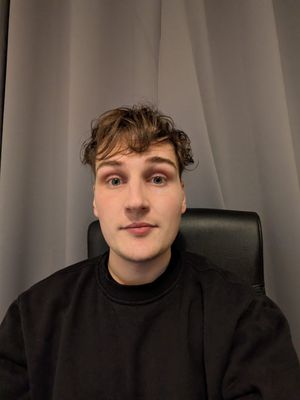
Medium is where Jake Mura first existed.
I shortened and adapted my name because I was writing for an English-speaking audience, and the pen name worked. Irrelevant Matters also began there, first as a Medium publication rather than an independent website. I spent a long time editing submissions, working through hundreds of pieces, and eventually publishing around a hundred of them.
A lot of what I know about publishing online came from that experience.
Medium also still pays writers. Its Partner Program is real, currently requires an active Medium membership to join, and calculates earnings using member reading time, engagement, Boost, external traffic and other factors.
So my conclusion is not that Medium is fake, dead, or useless. My conclusion is that Medium taught me the difference between access and control.
The platform can change its payout formula. It can change distribution. It can change the role of publications. It can change the requirements for monetization. It can change management, recommendation systems, policies, and product priorities. Medium's own current Partner Program terms explicitly reserve the right to modify, suspend, or discontinue the program or parts of it.
And that is normal for a large platform.
It is also why I eventually concluded that having your own blog is still worth it, despite the cost and technical annoyance of maintaining your own site.
Medium is a useful island, but I would not call it home
I still think Medium can be worth trying for a new writer.
It removes an enormous amount of friction. You do not need to understand hosting, domains, themes, technical SEO, analytics, email infrastructure, or how to build a website before publishing your first sentence. You can create an account and start. There are publications, recommendation systems, comments, followers, newsletters, a Partner Program, and an editor that mostly stays out of your way.
Also, an independent website does not come packed with an existing audience, while Medium already has a large internal network, its own recommendation system, email distribution, apps, publications, and Boost.
Yes, Medium still does have real readers. What I would be much more careful about is the idea that those readers are simply waiting for you.
My own experience was that a lot of the visible activity on Medium came from writers interacting with other writers. That can create a genuine community, but it is not the same as reaching a wider readership. Unless your stories are regularly boosted or otherwise pushed into broader distribution, you can easily get stuck in a bubble of writers reading and engaging with other writers, each trying to build an audience of their own. It is a pretty miserable loop.
However, for somebody who has never published online and mainly wants to discover whether they enjoy writing in public, I still think that is a compelling offer. You can write, meet other writers, find readers, earn money, and occasionally have a story reach far beyond your immediate network.
But I would no longer put all of my writing there.
If you are serious about publishing for years, build something you control when you are able to. Learn what a canonical link is and let Medium become another place where your work can travel.
You can still participate in the community. You can submit to publications. You can earn money. You can find interesting people. You can benefit when the platform decides to distribute something widely, but you just do not have to build your entire identity around the hope that it keeps doing so.
To put it bluntly:
Medium can be a very useful island. I simply would not build my house on it.
Thanks for reading. If this review helped, you can subscribe, explore more reviews, or support the project.